Google Analytics
Website analytics tracking across all traffic sources, conversion funnels, user flow, and goal completion, the foundational data layer for all CRO work.

CRO · Sydney
More customers from the traffic you already have.
I combine user behaviour analysis, website analytics, and targeted CRO work to identify exactly where your site is losing potential customers, and implement the changes that fix it. You'll be dealing with me directly, backed by a small, hands-on team.









A mobile vehicle repair business wanted more leads without spending more to get them. Over 12 months, landing page conversion rate optimisation combined with Google Ads management took their conversion rate from 10.75% to 16.44%. Lead volume rose 93% and cost per lead fell 47%, from $35.72 to $18.75.
The traffic was already there. Making the page convert better is what moved the numbers.
Conversion rate optimisation (CRO) is the structured process of increasing the percentage of website visitors who complete a desired action: a purchase, an enquiry, a booking, or a sign-up. It combines user behaviour analysis, data-driven testing, and targeted implementation to turn existing traffic into more customers without increasing ad spend.
Conversion rates are calculated by dividing conversions by visitors and multiplying by 100. Typical conversion rates vary significantly by industry, and landing pages built for a single, specific offer tend to convert better than general website pages.
Page speed and mobile experience both have a material impact on conversion. Slow load times and poor mobile usability are common drop-off causes across industries, which makes conversion optimisation increasingly a mobile-first discipline rather than a desktop one with mobile as an afterthought.
I'm Aaron Knight, a Sydney-based digital marketing specialist with over 13 years of experience optimising websites and sales funnels for Australian businesses. You'll be dealing with me directly, backed by a small, hands-on team for design and development work.
Most businesses focus on increasing traffic. But this approach ignores a more efficient lever: improving conversion rate.
If your site receives 1,000 visitors per month and converts at 2%, you get 20 leads. Doubling traffic to 2,000 visitors gives you 40 leads, but costs significantly more in ad spend or SEO investment. Improving your conversion rate from 2% to 4% with the same 1,000 existing visitors also gives you 40 leads, at a fraction of the cost.
The core benefits of conversion rate optimisation are higher revenue, improved user experience, and critically, lower acquisition costs. When conversion rates improve, every dollar of marketing spend generates more paying customers. This applies across all traffic sources: Google Ads, SEO, social media, and direct traffic all benefit from better conversion rates.
The impact amplifies when traffic and conversion rate improve together. A business driving 5,000 visitors per month at 4% converts 200 customers. The same business at 2% converts 100. That difference, driven by conversion optimisation rather than more traffic, doubles the result from the same marketing spend.
Effective CRO work involves genuine user experience improvements alongside data-driven testing. Analysing real user behaviour and feedback means the improvements that boost conversions also tend to reduce bounce rates, improve session duration, and signal quality to search engines.
Every unnecessary step between a visitor's intent and their desired action is an opportunity to lose them. These are the areas I look at first.
Slow load times are one of the most consistent conversion killers. Even small delays can reduce conversions, and slow sites lose visitors before they've seen a single word of content. Speed issues are frequently the quickest wins in a CRO audit.
Does your landing page communicate what you do, who it's for, and why a visitor should choose you within the first few seconds? Unclear value propositions, mismatched headlines, and weak above-the-fold content are among the most common conversion barriers.
Clear, specific call to action buttons can increase user engagement and conversions. Vague calls to action ("Learn more", "Contact us") tend to underperform against specific, benefit-oriented alternatives. Placement, colour contrast, copy, and size all affect click-through rate.
Customer testimonials, customer reviews, and security badges can reduce hesitation and encourage purchases. Missing or poorly positioned social proof is a frequent source of conversion loss, particularly for first-time visitors with no prior relationship with your business.
Confusing navigation, excessive form fields, unclear product descriptions, and complex checkout flows all add friction that reduces conversion rates. Reducing form fields in web form design can increase completion rates.
Mobile responsiveness issues are frequently different from desktop issues and require separate analysis. Many websites that look fine on desktop have significant mobile conversion problems that aren't visible without proper user behaviour analysis.
Clear pricing, well-positioned discount codes or offers, and strong benefit-oriented copy on pricing pages directly affect conversion at the bottom of the sales funnel, where purchase intent is highest.
For ecommerce stores, CRO goes beyond simply getting more customers. Improving average order value through upsells, cross-sells, and bundle offers amplifies revenue from every conversion.
From a one-off audit to ongoing testing, every recommendation is actionable and tied to a specific conversion improvement.
A comprehensive audit of your website against a 300+ point checklist covering every aspect of the customer journey, from initial landing through to desired action. The CRO audit identifies specific issues, prioritises them by potential impact, and produces a clear action list. $4,999 + GST, delivered within two to three weeks of engagement.
What the audit covers:
For businesses running Google Ads or other paid traffic, landing page performance is the most direct lever on cost per acquisition. Improving conversion rates on landing pages simultaneously reduces cost per lead and increases leads generated, without increasing marketing spend. If you need a new landing page built rather than an existing one improved, landing pages start from $1,500.
For ecommerce websites and online stores, I audit the complete purchase funnel (product pages, cart, checkout, and post-purchase flows) to identify exactly where customers are abandoning and implement changes to reduce drop-off and improve average order value.
Where traffic volumes support it, I design and run tests to validate hypotheses with data rather than assumptions. Well-designed A/B tests can meaningfully improve conversion rates, though not every test produces a winning result, which is why test design and hypothesis quality matter as much as the testing itself. For higher-traffic sites, multivariate testing identifies which combinations of elements drive stronger conversion rates across the full page.
Using Hotjar for heat mapping, session recordings, and scroll depth analysis, I identify exactly how visitors are interacting with your pages: where they're clicking, where they're stopping, and where they're leaving. Direct feedback and structured user research add the motivations and hesitations that quantitative data doesn't explain.
For businesses that want continuous conversion optimisation (ongoing A/B testing, user behaviour analysis, implementation, and monthly reporting), retainer pricing is scoped based on the volume and complexity of work required. CRO is an iterative process. What works today may not be optimal in six months as your traffic sources, audience, and offer evolve. Ongoing CRO delivers compounding improvements as each test result informs the next.
Analytics tools help visualise how users are actually navigating your pages. My CRO toolkit includes:
Website analytics tracking across all traffic sources, conversion funnels, user flow, and goal completion, the foundational data layer for all CRO work.
Search performance data that informs which landing pages are attracting the highest-intent organic traffic, and where optimisation will have the greatest impact on conversion rates.
Heat maps, session recordings and on-page surveys in one tool, showing where users are clicking, scrolling, hesitating and abandoning, and capturing feedback directly from site visitors to complement the quantitative analytics data.
Running statistically valid tests across pages, email campaigns, and ad landing pages, using the platform best suited to your site and traffic level.
CRO + SEO. CRO and SEO work best together. Improving page speed, content clarity, and user experience benefits both conversion rates and search engine rankings. I approach CRO work with SEO implications in mind, ensuring that optimisation changes don't inadvertently harm organic search performance.
CRO + Google Ads. Landing page quality score directly affects ad rank and cost per click in Google Ads. Improving landing page relevance and conversion rates simultaneously reduces cost per click and increases leads generated, a compounding improvement that paid search campaigns without CRO never fully achieve. I also manage Google Ads, from $1,000 per month, so the campaign and the page it sends traffic to are handled together.
A unified digital marketing approach. The strongest digital marketing strategy treats CRO, SEO, and Google Ads as a unified system rather than separate channels. More traffic from better-targeted Google Ads, converting at a higher rate through CRO-optimised landing pages, reinforced by organic search visibility through SEO: each discipline multiplies the impact of the others.
Five steps, starting with a clear baseline so every change can be measured against it.
Before making any changes, establish a clear baseline across key metrics: current conversion rate by traffic source, average order value, leads generated per month, and conversion funnel drop-off points by page.
A structured CRO audit using analytics data and user behaviour analysis identifies the specific friction points, usability issues, and conversion barriers across your site.
Recommendations are prioritised into quick wins (high impact, low implementation effort) and longer-term optimisations, so conversion improvements begin immediately while more complex changes are planned and resourced.
Changes are implemented and tracked against the baseline. Where traffic supports it, A/B testing validates improvements before full rollout, ensuring every change is genuinely improving performance rather than making assumptions about user preferences.
CRO is an ongoing process of continuous testing and refinement. Results from each test inform the next hypothesis, building a cumulative body of knowledge about how your specific target audience interacts with your site and what drives them to convert.
A CRO audit is a comprehensive 300+ point review covering every stage of the customer journey, with a fully detailed action list of identified issues, prioritised recommendations, and specific fixes. Delivered within two to three weeks of engagement.
A landing page build is a focused landing page designed and built to convert, scoped and quoted clearly before any work begins.
An ongoing CRO retainer is scoped based on the volume of A/B testing, user behaviour analysis, implementation, and reporting required. Get in touch for a quote.
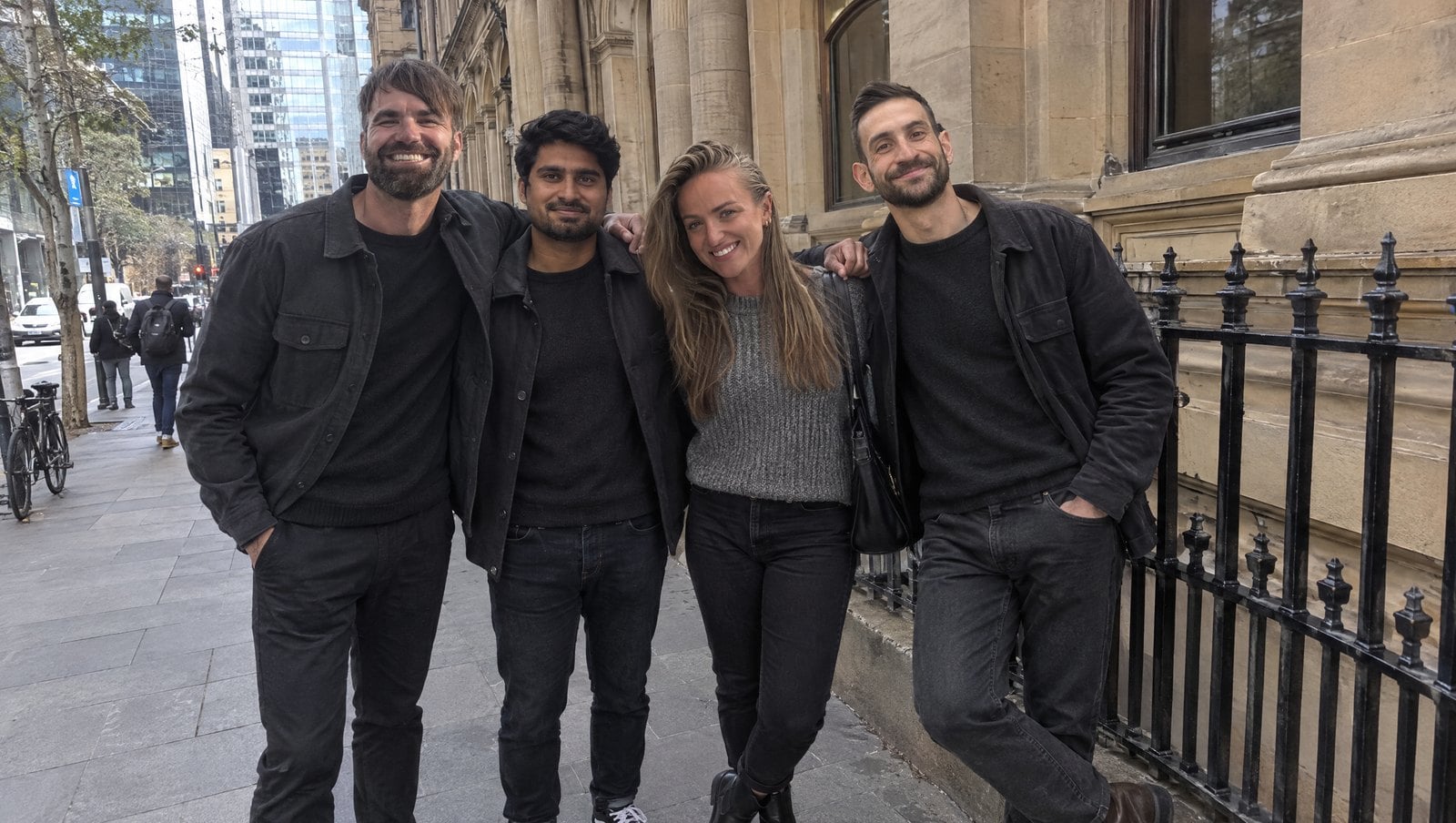
I'm Aaron Knight, with 13+ years in digital marketing and web design, a CSS Design Awards win, and a 4.9-star rating from 33 Google reviews. Clients include Eden Brae Homes, Champion Homes and Deicorp. You'll be dealing with me directly, backed by a small, hands-on team.
It depends heavily on your starting point. Sites with significant technical, UX, or messaging problems frequently see meaningful conversion rate improvements from a well-executed audit and implementation. Incremental improvements through continuous testing compound further over time. I'll give you a realistic expectation based on your specific site during the initial conversation.
A comprehensive audit typically takes two to three weeks from engagement to delivery. Implementation timelines depend on the scope of recommended changes and your development resources.
If you've never had a CRO audit, start there. It gives you a clear picture of every issue on your site and a prioritised action list. Ongoing CRO retainers are most valuable for businesses with sufficient traffic to support A/B testing and a culture of continuous improvement.
A CRO audit can identify actionable improvements regardless of traffic volume. A/B testing requires sufficient traffic to reach statistical significance, typically at least 500 to 1,000 monthly visitors per page being tested. I'll advise on whether testing is viable for your traffic levels during the initial conversation.
Both. The audit delivers a clear action list you can implement yourself or hand to a developer. If you'd prefer I handle implementation directly (as a one-off project or on an ongoing basis) that's available as an additional engagement, with the design and development team behind me when a project needs it.
Whether a 2% conversion rate is "good" depends entirely on your industry and your specific business context. Conversion rates vary widely between ecommerce stores, B2B lead generation sites and service businesses, and a service business with high average order value may be perfectly satisfied with a low conversion rate if each customer is worth thousands of dollars. The more useful question isn't whether your conversion rate looks "good" compared to a generic benchmark. It's whether there are specific friction points in your conversion funnel preventing customers who are ready to convert from actually doing so. That's what a CRO audit identifies.
SEO (search engine optimisation) focuses on increasing the volume of website visitors through improved organic search rankings. CRO (conversion rate optimisation) focuses on increasing the percentage of existing visitors who complete a desired action. SEO without CRO brings more traffic to a poorly converting site, wasting the investment. CRO without SEO improves the efficiency of existing traffic but doesn't grow the overall opportunity. The strongest approach combines both: SEO to grow the audience, CRO to maximise the value of that audience.
Every CRO engagement is scoped and quoted clearly before any work begins, with transparent pricing and direct access throughout. Every recommendation is actionable and tied to a specific conversion improvement, and I'll give you a realistic expectation based on your specific site during the initial conversation.
If you're generating traffic but not converting it at the rate you should be, a CRO audit is the fastest way to understand why, and what to do about it.
I also manage Google Ads and SEO, so the campaign, the search visibility and the page it all lands on can be handled together. Send through an enquiry and I'll get back to you promptly.